


For over twenty years, British broadcaster and author Alexandra Tolstoy has been carefully restoring and decorating an 18th-century stone cottage in a picturesque village in the Cotswolds.
Alexandra purchased the property in 2004, initially as a rural escape for her family and her three children. Over time, however, this historic English manor has evolved into a full-fledged business project. When the family is in London, the house is available to rent on Airbnb, allowing guests to immerse themselves in classic interiors, enjoy picnics in the garden, and explore the golden-stone villages of South West England.
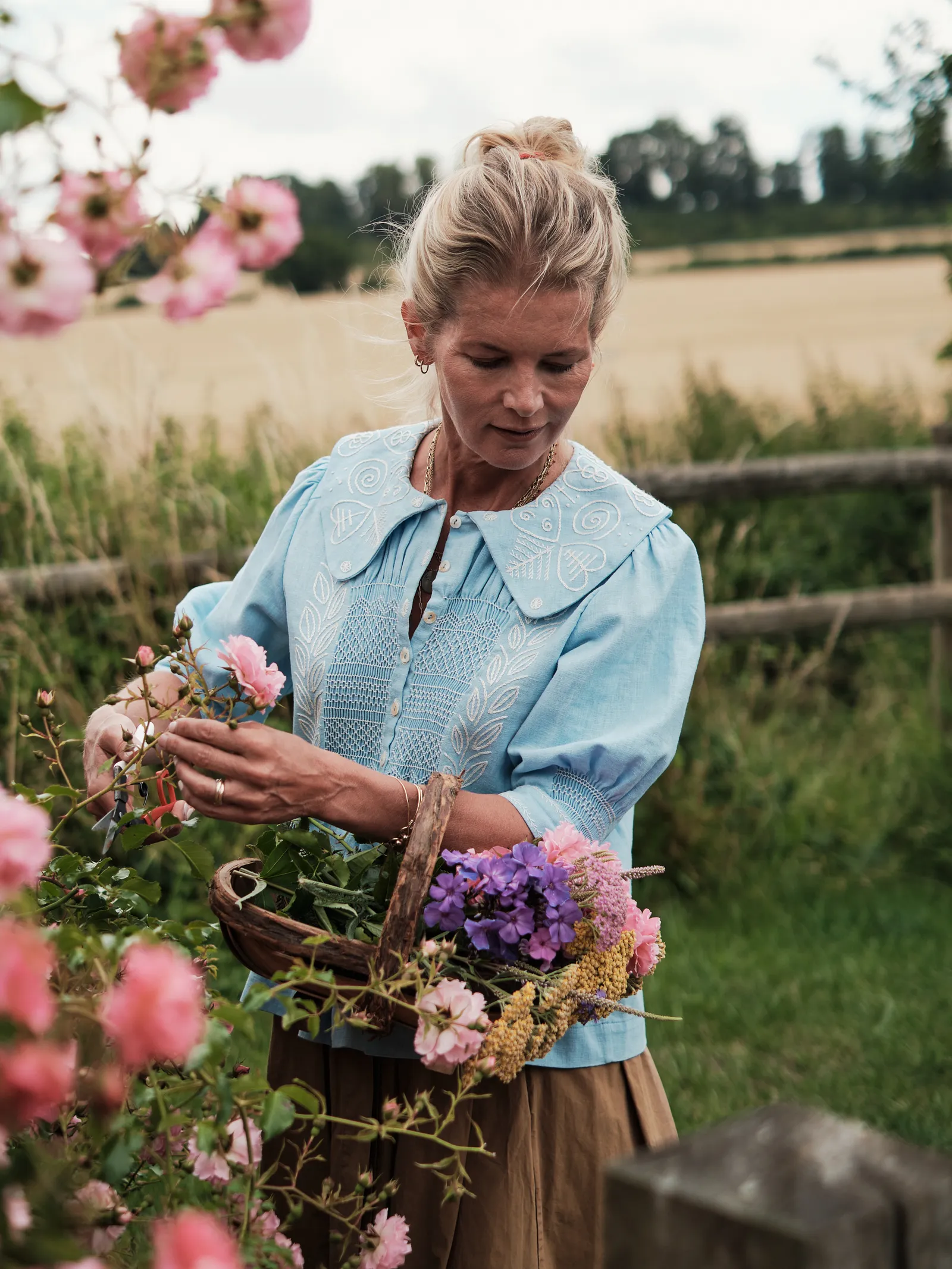
Alexandra herself is a fascinating figure: a British aristocrat, writer, and descendant of the legendary Leo Tolstoy. She balances her time between managing her shop, The Tolstoy Edit, and organising equestrian expeditions in Kyrgyzstan.
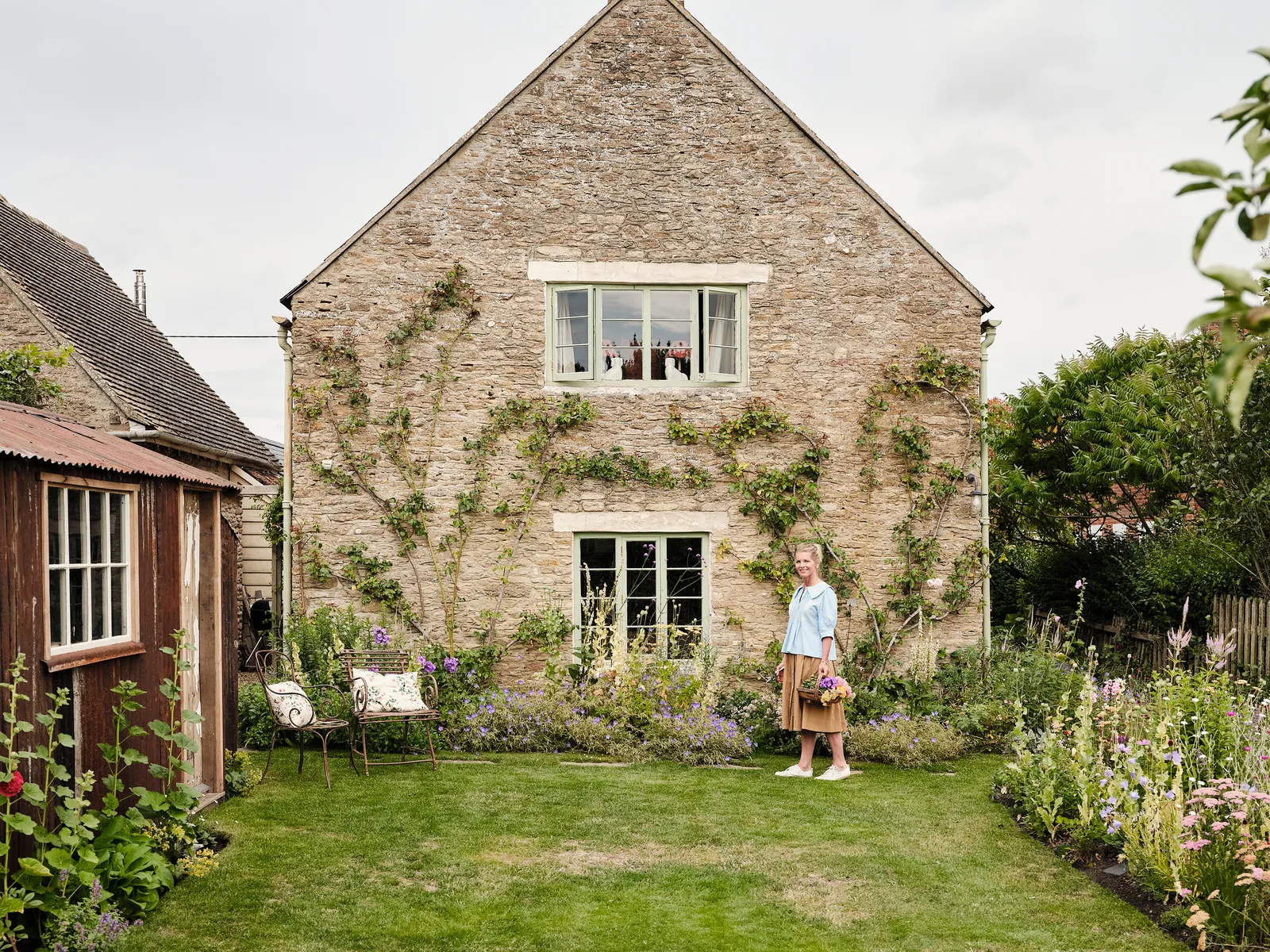
Staying in a home with over two hundred years of history is a true adventure, especially for those with a passion for design. Inside the cottage, quintessentially English traditions are woven together with Central Asian influences (her first husband was from Uzbekistan) and deeply rooted Russian motifs.
In the early 2000s, Alexandra lived in Moscow with her husband, Uzbek athlete Shamil Galimzyanov, where she worked in interior design and taught English. It was during this period she met her second husband, Sergei Pugachev. Following their separation, Alexandra returned to England with her three children—Alexey, Ivan, and Maria. She has often spoken about the challenges of that period, emphasizing that the Cotswold cottage was purchased with her own hard-earned savings.
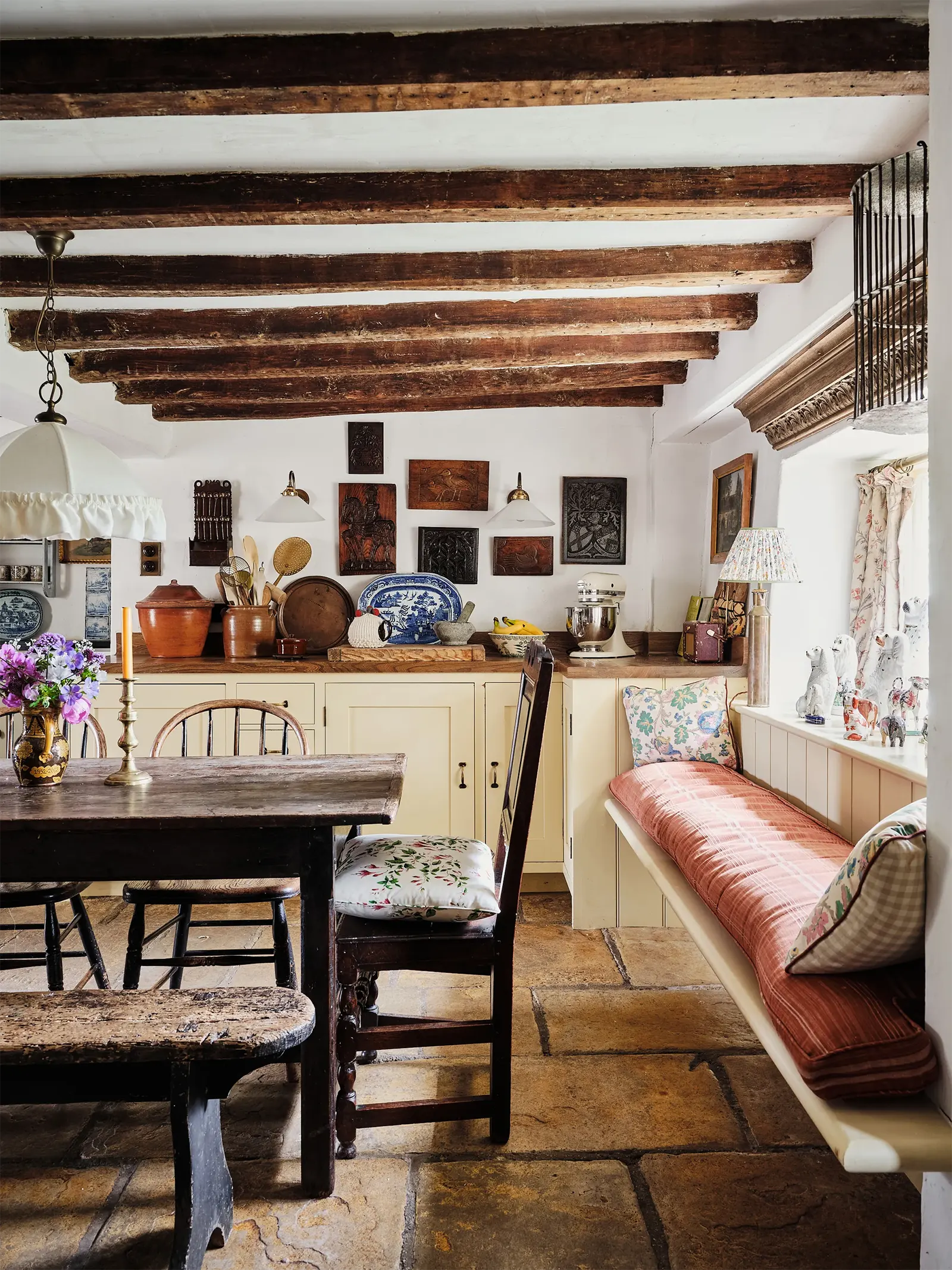
The kitchen remains the heart of the cottage, retaining the classic hallmarks of a historic English home: flagstone floors, rough-hewn timber furniture, plastered walls, and exposed ceiling beams.
The rooms are filled with substantial wooden furniture, iron bedsteads, and armchairs upholstered in traditional English fabrics. Yet, Alexandra insists there is no “luxury” here in the conventional sense.
“The antiques that fill the house were gathered bit by bit from local villages. It’s nothing grand. It would be absurd to have expensive things in a house like this…” she told House & Garden.
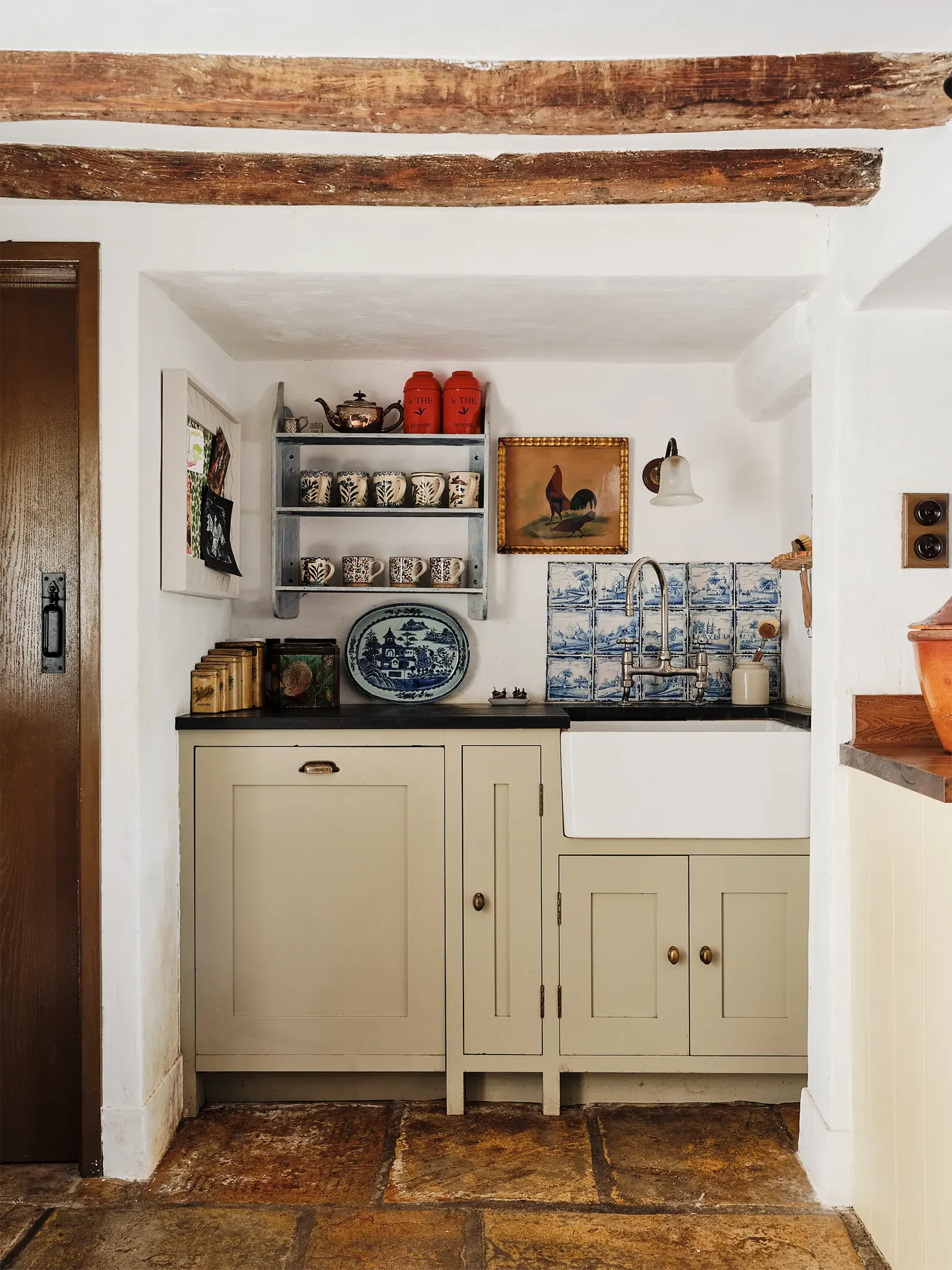
Above the sink, delicate blue-and-white Delft tiles catch the eye. The kitchen units, cleverly arranged to navigate the room’s irregular layout, were bespoke-made by the renowned firm Sibyl Colefax & John Fowler.
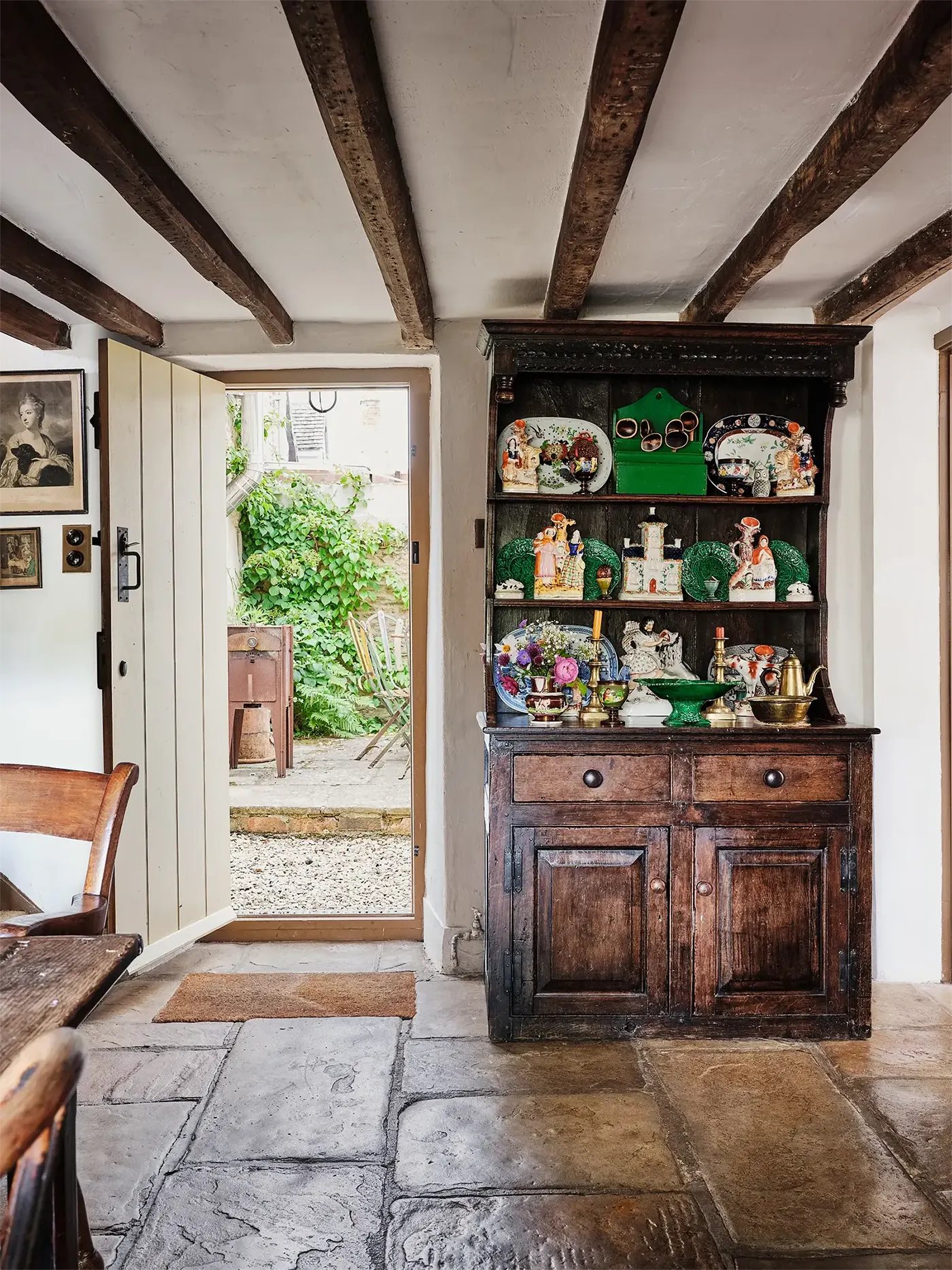
The kitchen opens onto a secluded courtyard. Note the dresser painted in a deep, forest green—a shade that harmonises perfectly with the raw wood and the rustic atmosphere of the village.
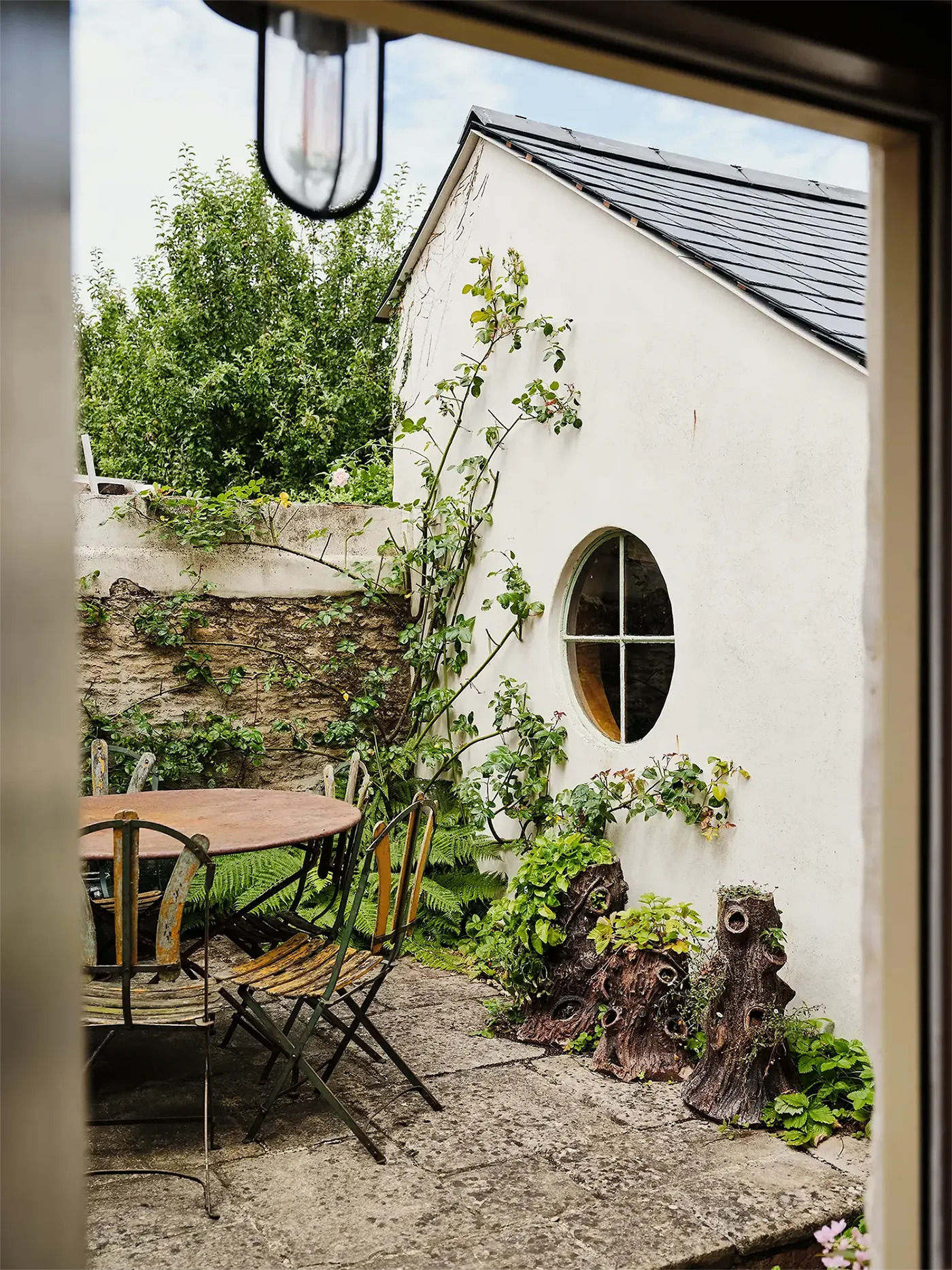
Just across the courtyard sits a small outbuilding: Alexandra’s private workshop.
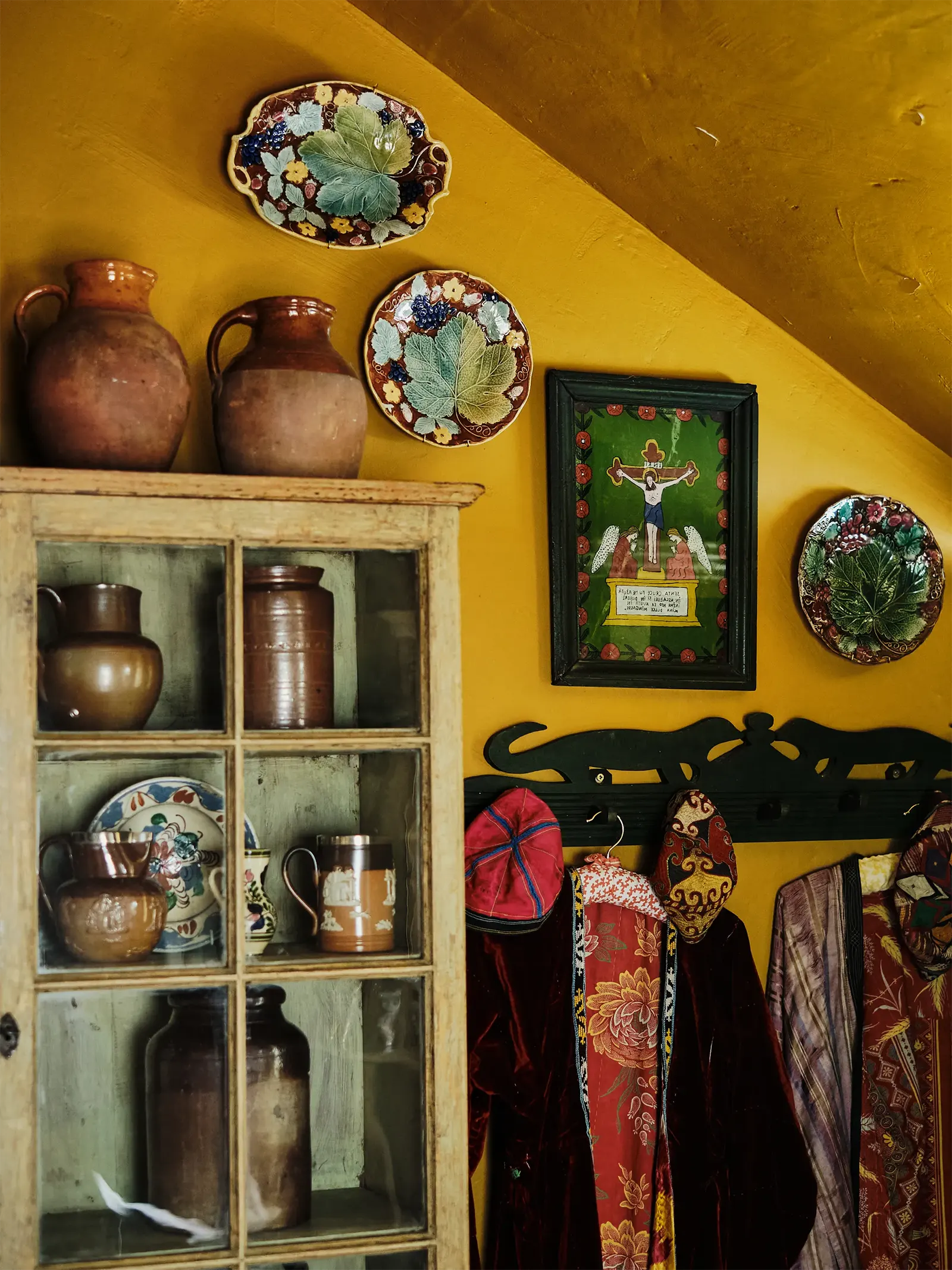
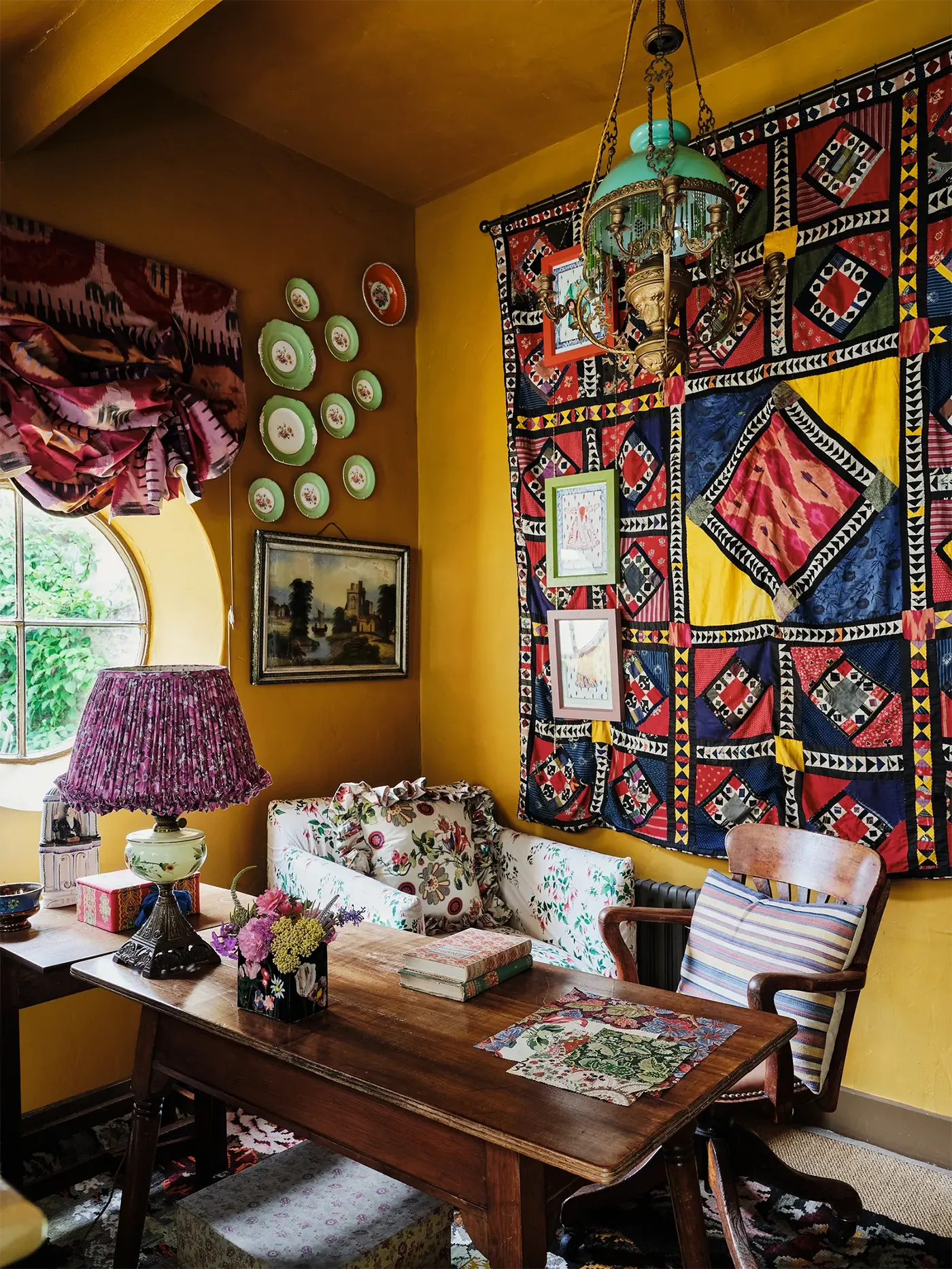
The atmosphere inside the workshop is unique. The traditional Uzbek robes hanging on the racks are not mere decoration; they are cherished mementos from a life-defining chapter spent in Central Asia.
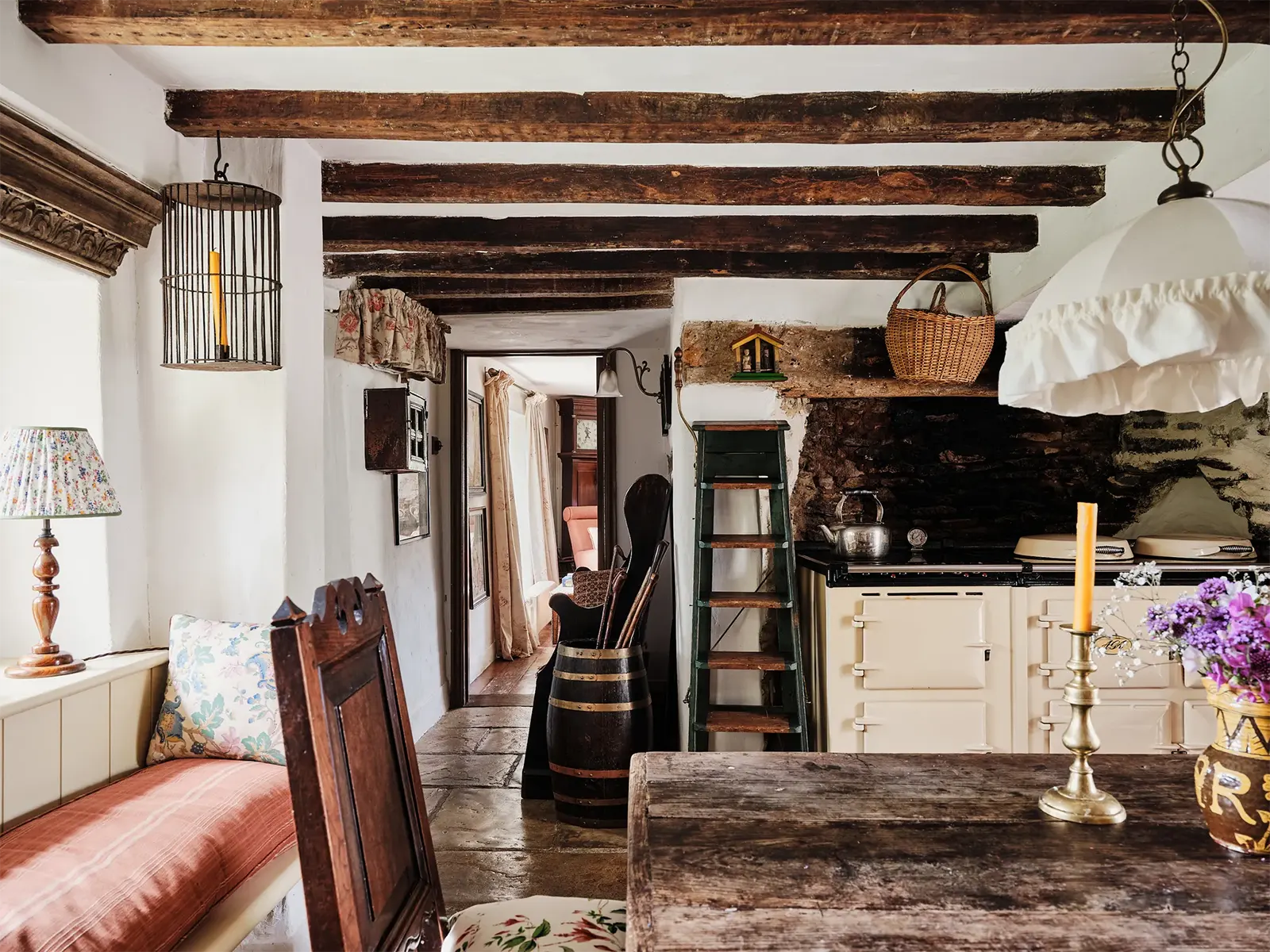
No English country kitchen is complete without an AGA. Though originally invented in Sweden, these iconic cast-iron cookers have been manufactured in Britain since 1957. Known for their incredible longevity, some AGAs remain in constant use for over 50 years. In 2009, the company even found a working model from 1932 that had belonged to the same family since new.
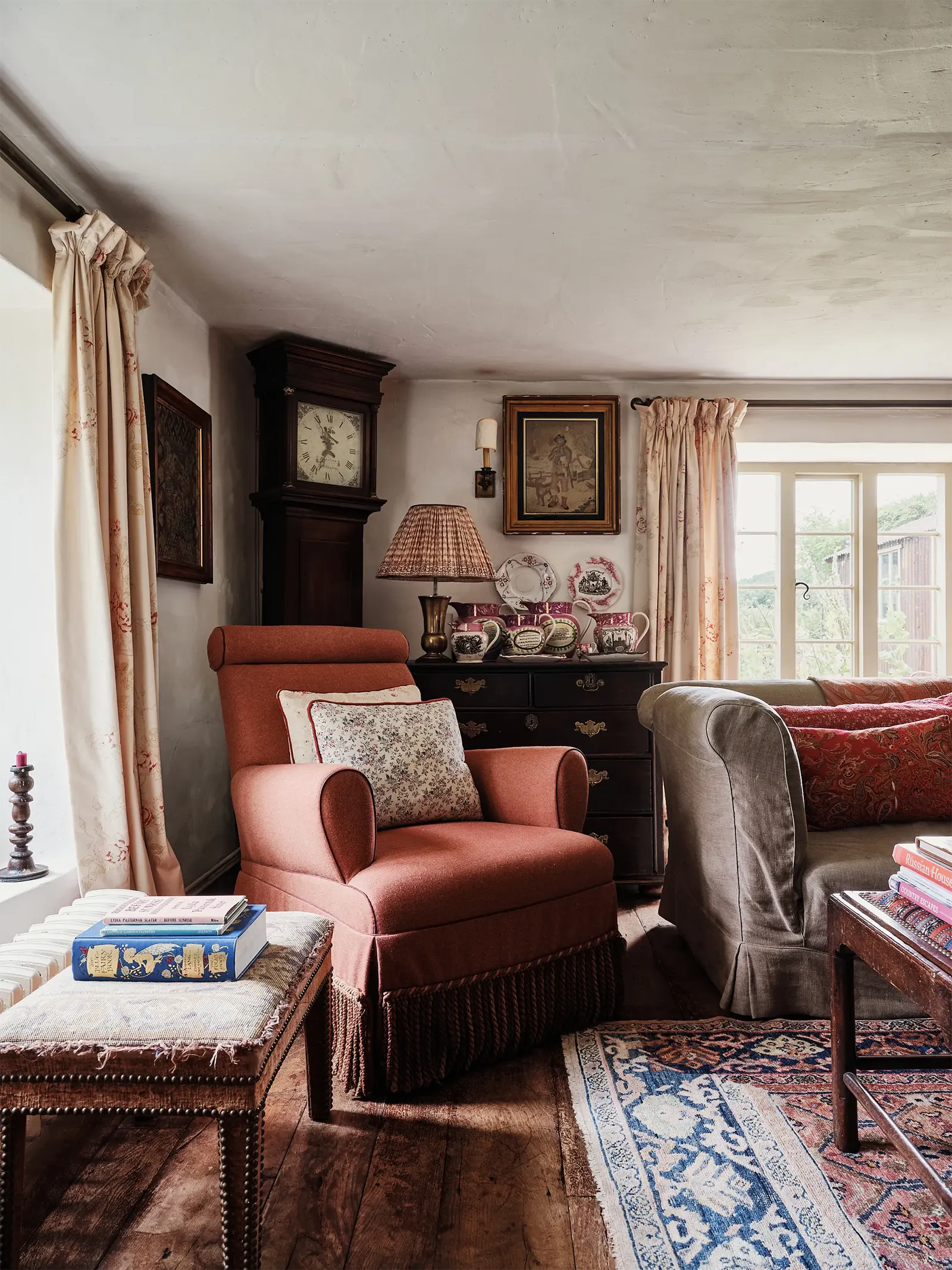
While old English cottages might seem similar at first glance, each possesses its own distinct character. It’s all in the nuances of colour, pattern, and texture.
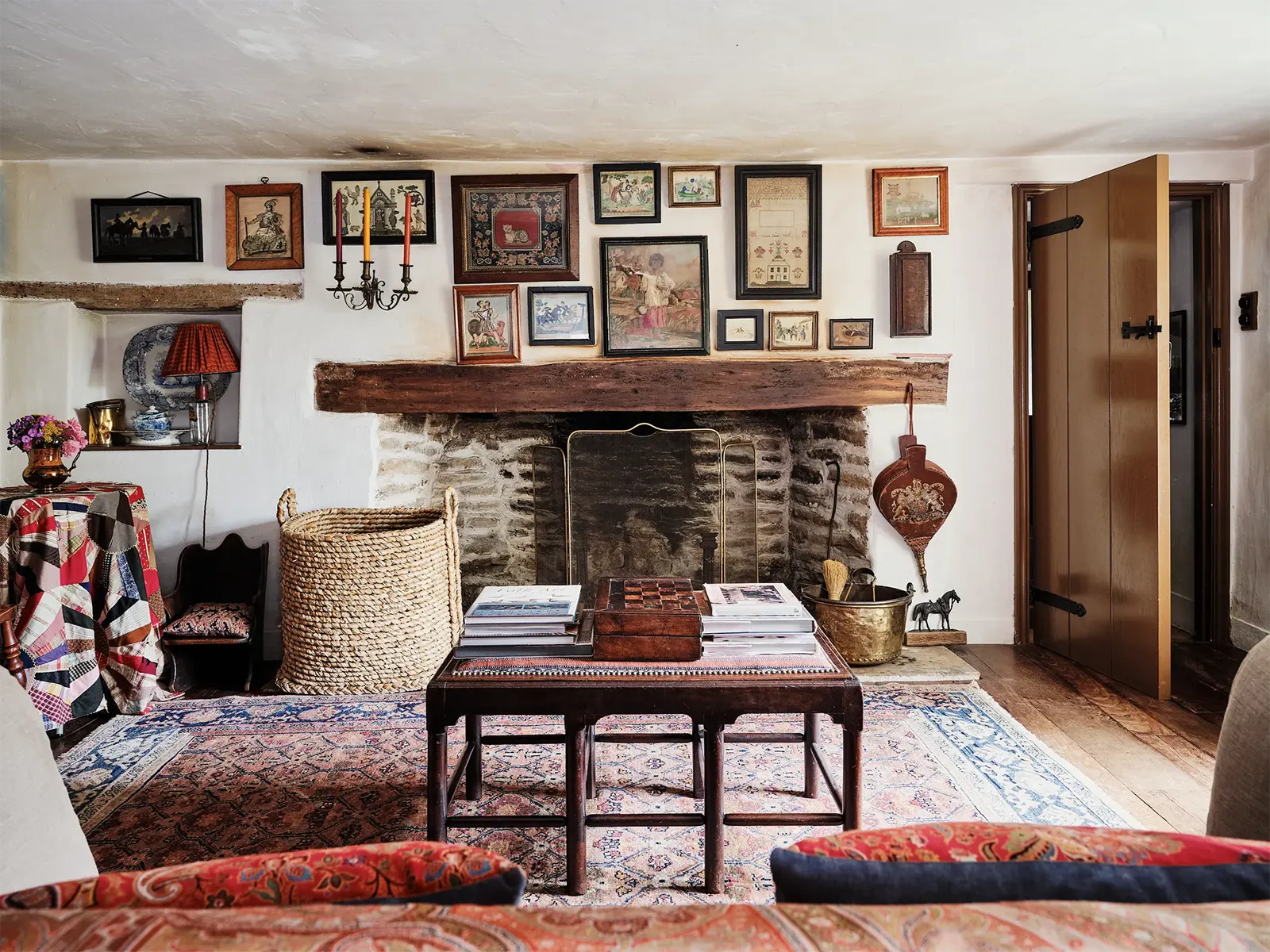
The living room is a masterclass in layered comfort. With its open fireplace, rich textiles, and curated collection of paintings and embroideries, every detail feels intentional yet lived-in.
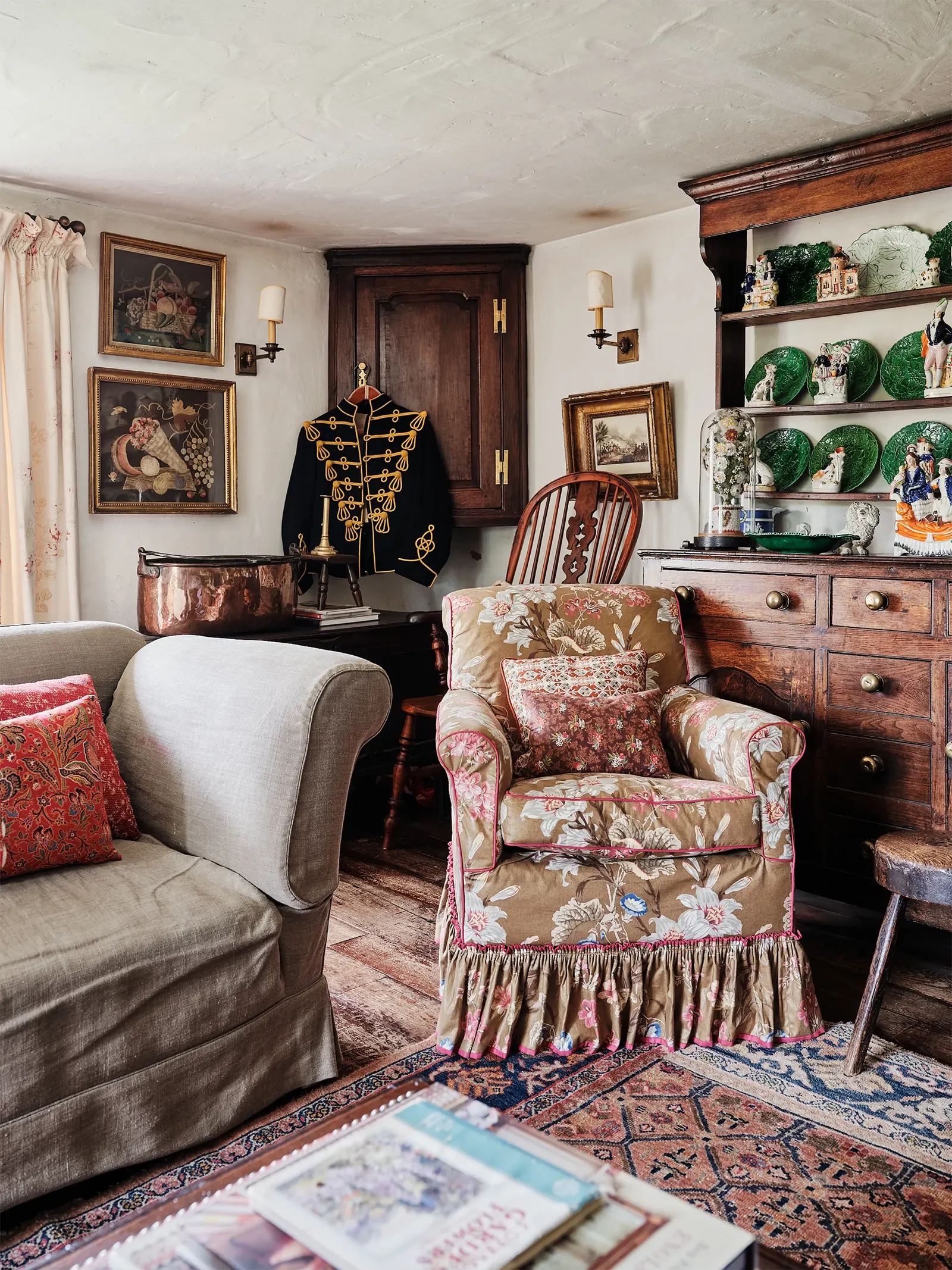
This antique armchair was a flea-market find, now refreshed with a bespoke cover made from vintage fabric.
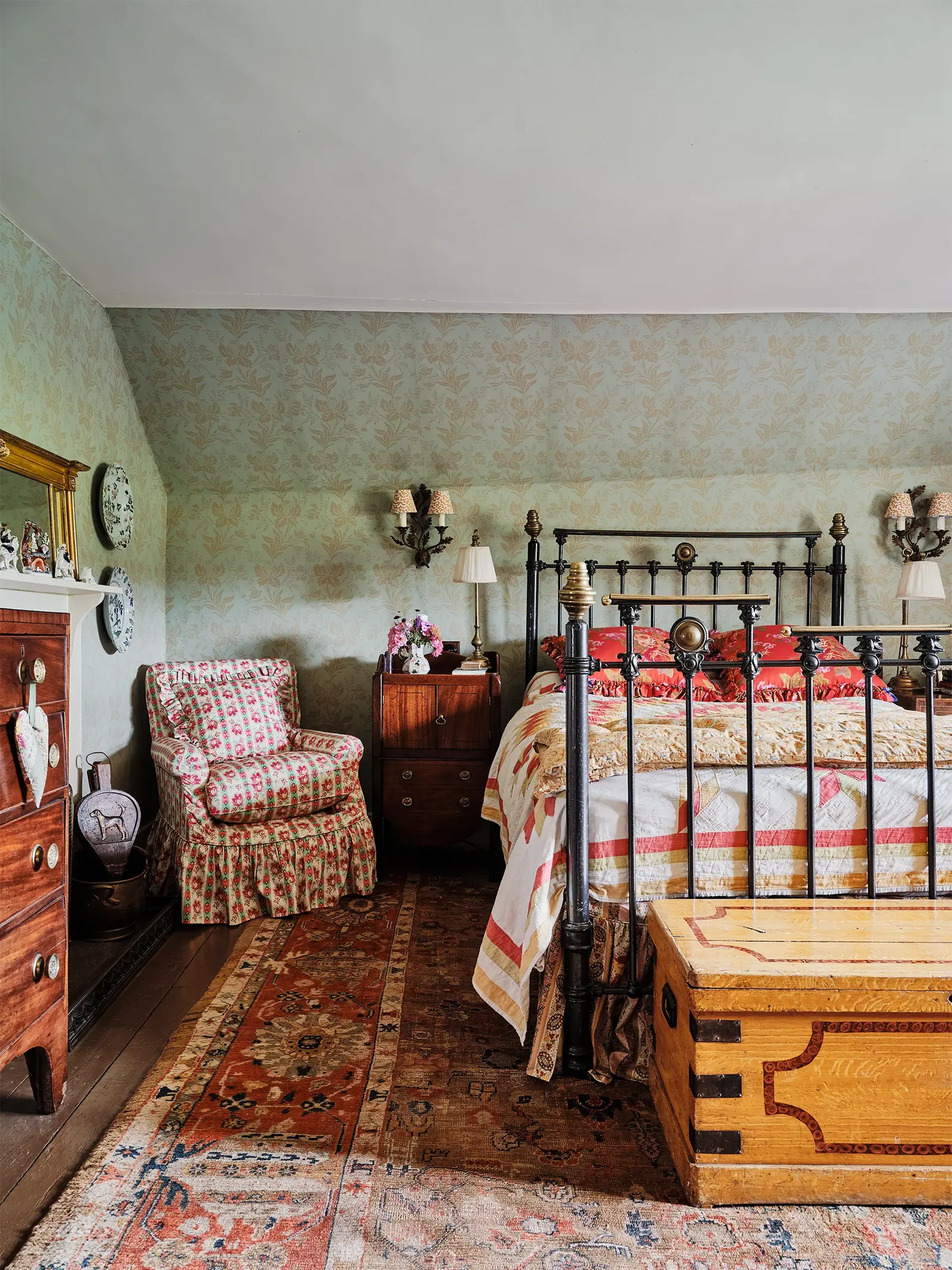
The upper floor houses the bedrooms. The striking red pillowcases feature a Russian-inspired print designed by Alexandra herself.
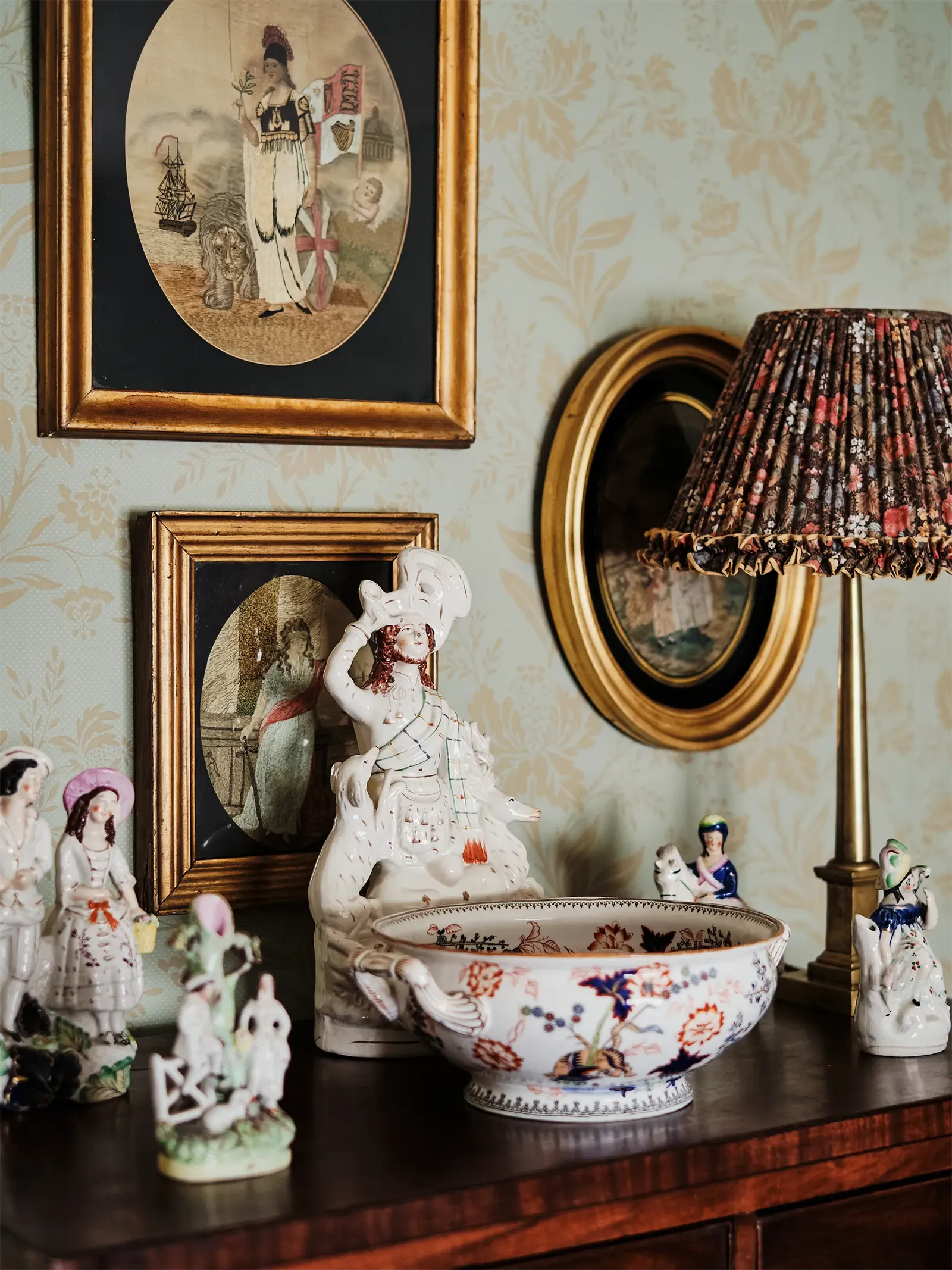
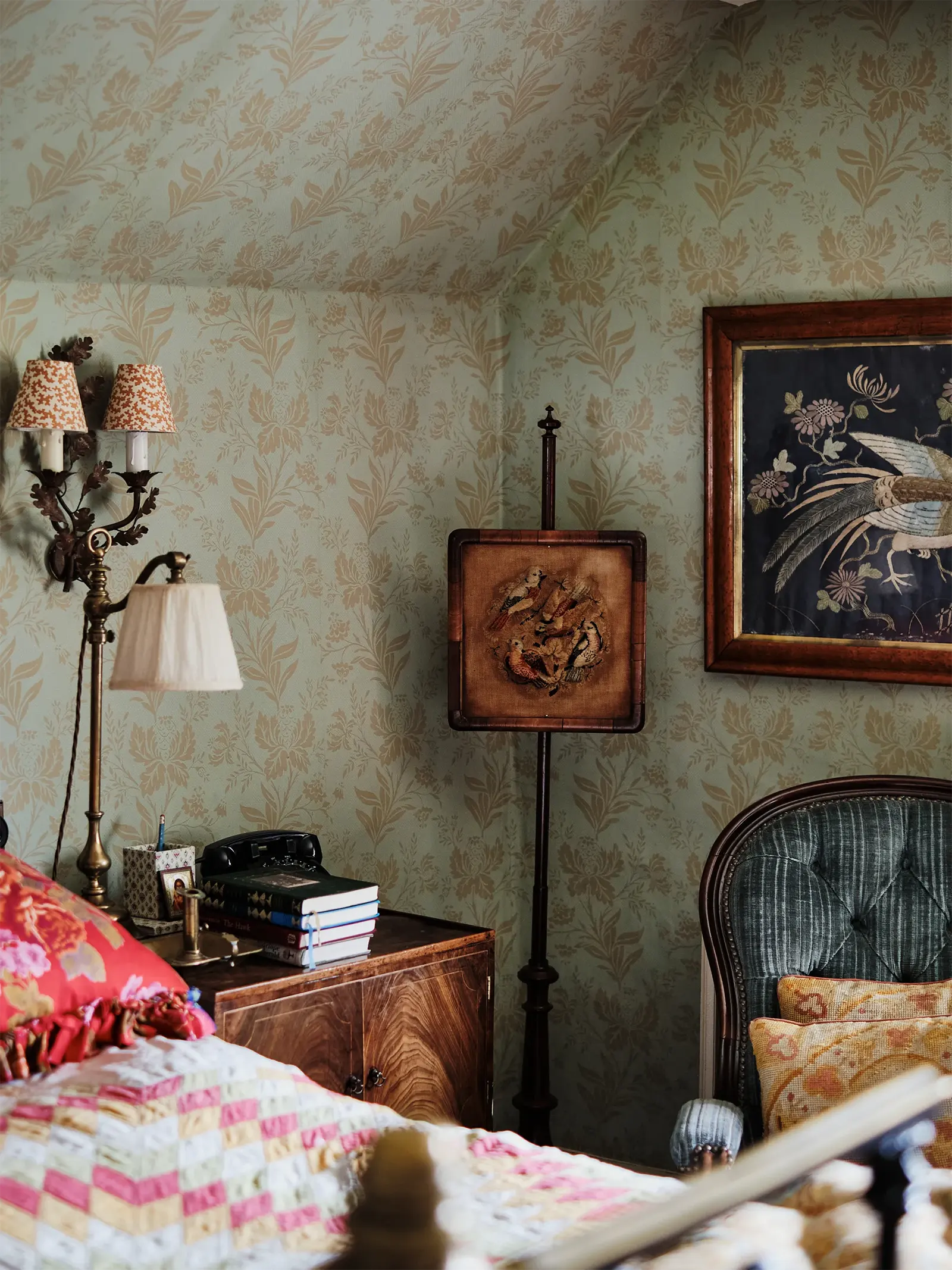
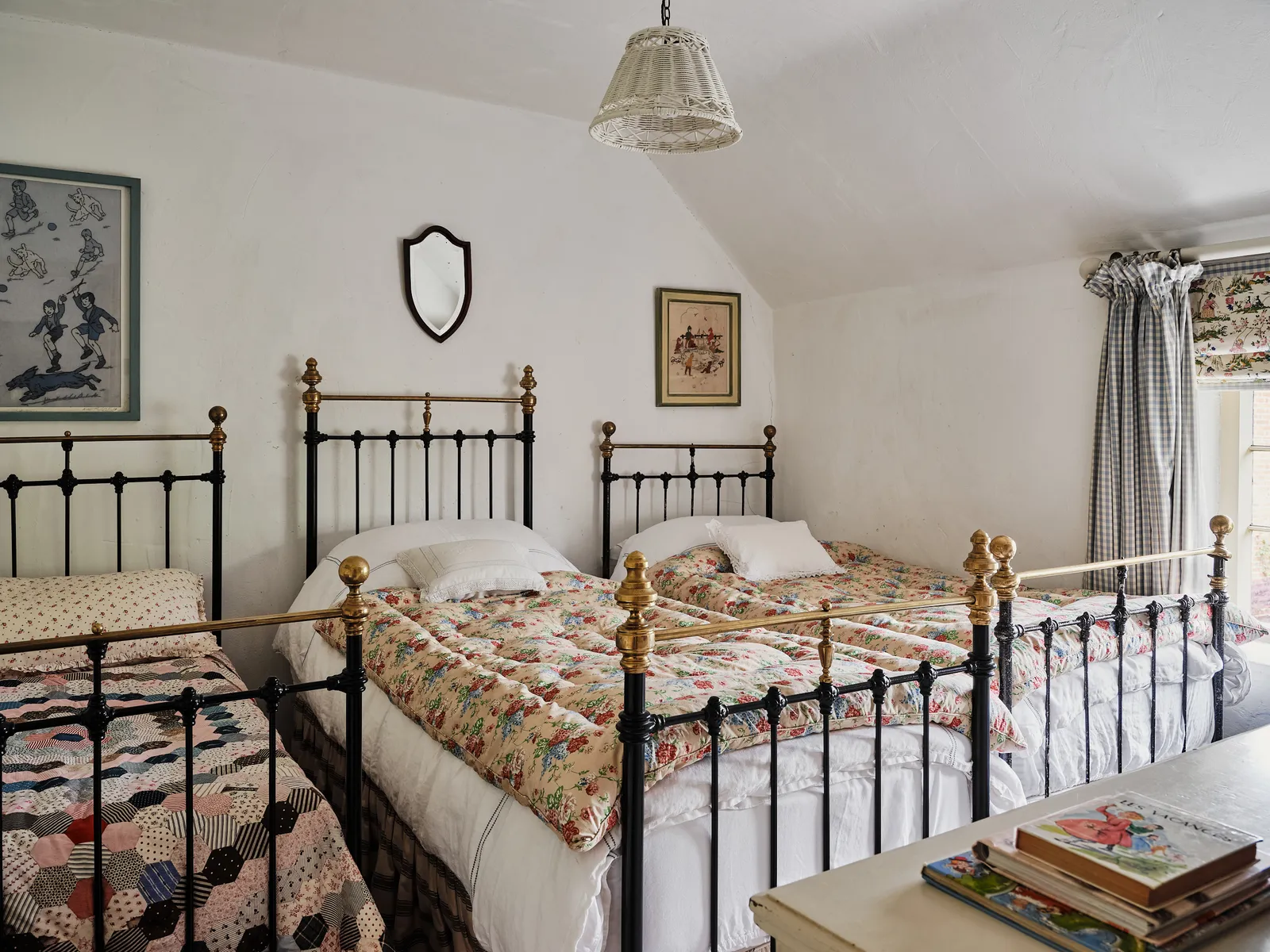
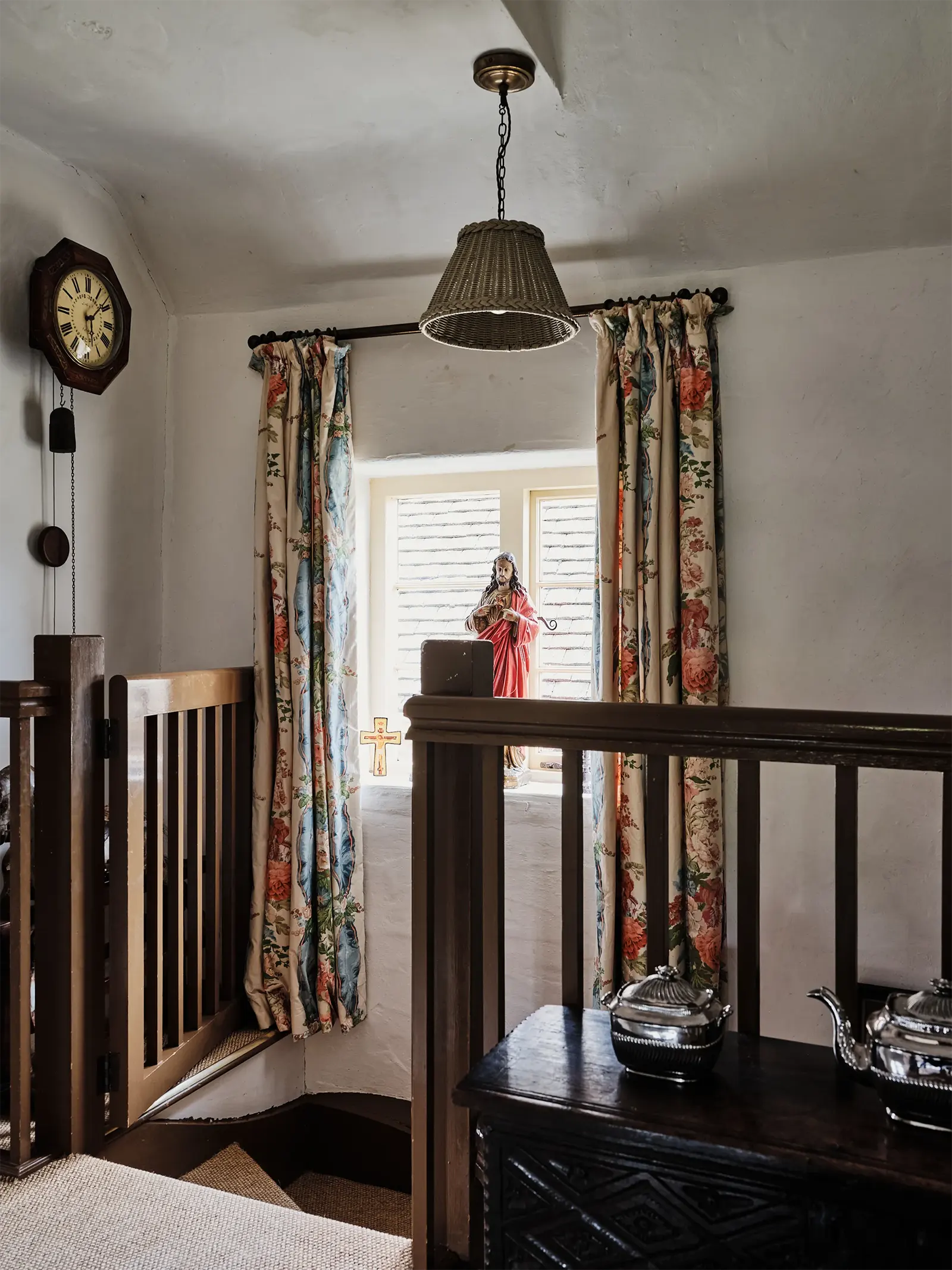
Remarkably, the curtains were left behind by the previous owner who lived here before 2004. Set against the dark timber and white walls, the fabric looks timeless—a testament to the enduring beauty of the English country style.
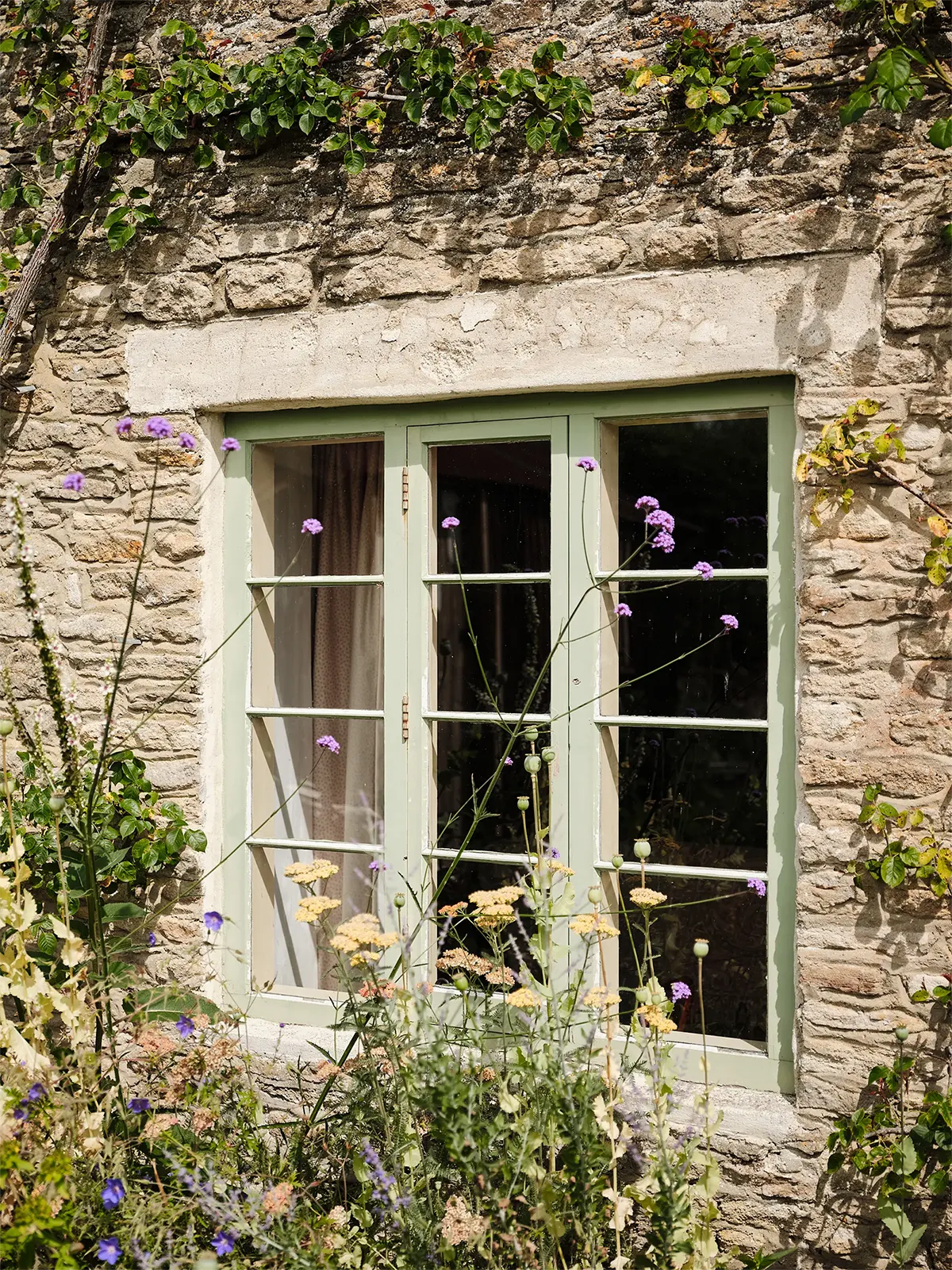
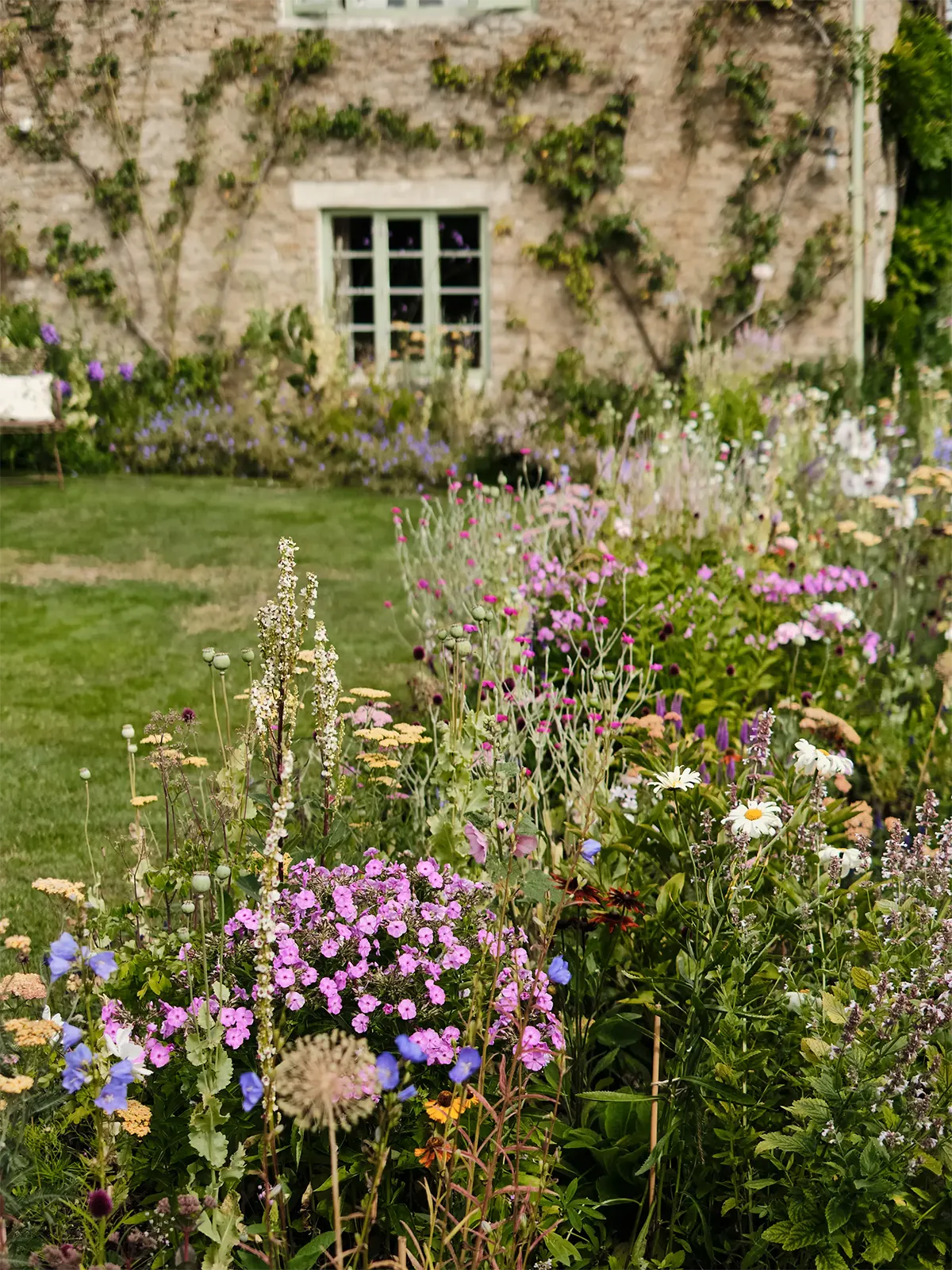
Photography: Dean Hearne


